


Trauma & Anxiety Therapist | Northern Virginia | Blooming Days Therapy

You're good at making it look easy. That's part of the problem.
You've been code-switching your whole life, between cultures, between roles, between the version of you that your family needs and the version of you that the rest of the world sees. You've gotten good at it. Fluent, even.
But there's a cost to being fluent in everyone else's language while never quite having one of your own.
Maybe you're the one who made it, the one who was supposed to. And there's a particular loneliness that comes with that, one that doesn't fit neatly into the vocabulary of either world you're navigating.
You don't need someone to explain what it means to carry your family's hopes alongside your own exhaustion. You need someone who already understands, so we can skip past the part where you translate yourself, and get to the part where something actually changes.
Hi, I'm Kumbe Anabelle Hwang, a licensed trauma and anxiety therapist working with high-achieving adults in Northern Virginia and Maryland. Sessions available in English and Korean.
How Trauma & Anxiety Therapy Works
in Northern Virginia
Calm at first.
Direct when it counts.
In the beginning, we identify the patterns that are showing up in your daily life, the shutdown, the over-explaining, the guilt that follows even small acts of self-assertion, and we trace them back to where they were learned. Not to blame anyone, but to understand what your nervous system adapted to, and why those adaptations made complete sense at the time.
Once that foundation is in place, we get practical. I use CBT and DBT tools not as rigid frameworks but as real strategies, ways to interrupt old cycles, practice new responses, and build skills that hold up outside this room.
My style shifts as we go. In early sessions, I'm more reflective, creating space for you to feel genuinely heard before we start doing anything with what we find. Later, I'm more direct. I'll name what I'm noticing, offer perspective, and push gently when pushing is what's needed. Clients often say they didn't expect to be that honest and that it was exactly what they needed.
How the work unfolds:

Phase 01 Awareness Without Blame
We map the patterns: where they came from, why they made sense, and what they're costing you now. No judgment, no agenda. Just clarity.
Phase 02 Practicing Something Different
We begin experimenting with new responses: clearer communication, steadier limits, staying present in conflict instead of shutting down or over-explaining.
Phase 03 Integration & Self-Trust
The goal shifts from skill-building to something deeper: a quieter nervous system, more self-compassion, and choices made from your own values rather than inherited ones.



Many therapists are well-trained and well-meaning and still operate from a framework that assumes independence is the goal, that family loyalty is something to work through, and that "healthy boundaries" looks the same in every cultural context. For many clients, that disconnect is exhausting before the real work even begins.
Why Choose a Bicultural Trauma Therapist
You Won't Have to Translate Yourself
Intergenerational dynamics, the emotional labor of code-switching, the weight of being first-generation, these aren't footnotes here. They're the starting point. We begin from a shared context, and we go from there.
Integration, Not Rejection of Your Culture
This work doesn't ask you to choose between your culture and your wellbeing. It asks something more nuanced: how do you hold your values and your needs at the same time, without treating them as opposites?
Holding Complexity, Your Family Isn't the Villain
We hold complexity here. Love and difficulty can coexist. Your parents may have done their best, and some of what they passed on still needs examining. Both things can be true at the same time.
Collectivist values are not a problem to fix
Western therapy often treats family loyalty and collective identity as things to overcome. Here, they're treated as a framework worth understanding and sometimes, worth keeping.
Boundaries that fit your actual life
You don't need someone to tell you to "just set limits." You need boundary language that feels respectful within your culture, not borrowed from a different context entirely.
Therapy in English & Korean
Some experiences can't fully be expressed in translation. Guilt, obligation, loyalty these can feel different depending on the language you're speaking. You deserve a space where nothing important gets lost.
People arrive here for different reasons but there are patterns I recognize. Most of my clients are capable, accomplished, and carrying something that doesn't show up in how they present to the world. They've been managing for years. They're ready for something more than management.
If you grew up in a household where emotions weren't prioritized, where success was mandatory rather than celebrated, or where your cultural identity put you between two worlds that didn't fully overlap, you're in the right place.
Online Therapy for High-Achieving Adults
in Northern Virginia & Maryland

Anxiety & Perfectionism Therapy
Overthinkers and over-functioners — people who've been running on high alert so long it feels like baseline.
Childhood Trauma Therapy for Adults
Adults carrying the long-term effects of emotional neglect, high expectations, and early responsibility, even when "it wasn't that bad."
Cultural Identity & Family Boundaries Therapy
Bicultural and multicultural adults navigating loyalty, faith-based expectations, and the tension between independence and belonging.
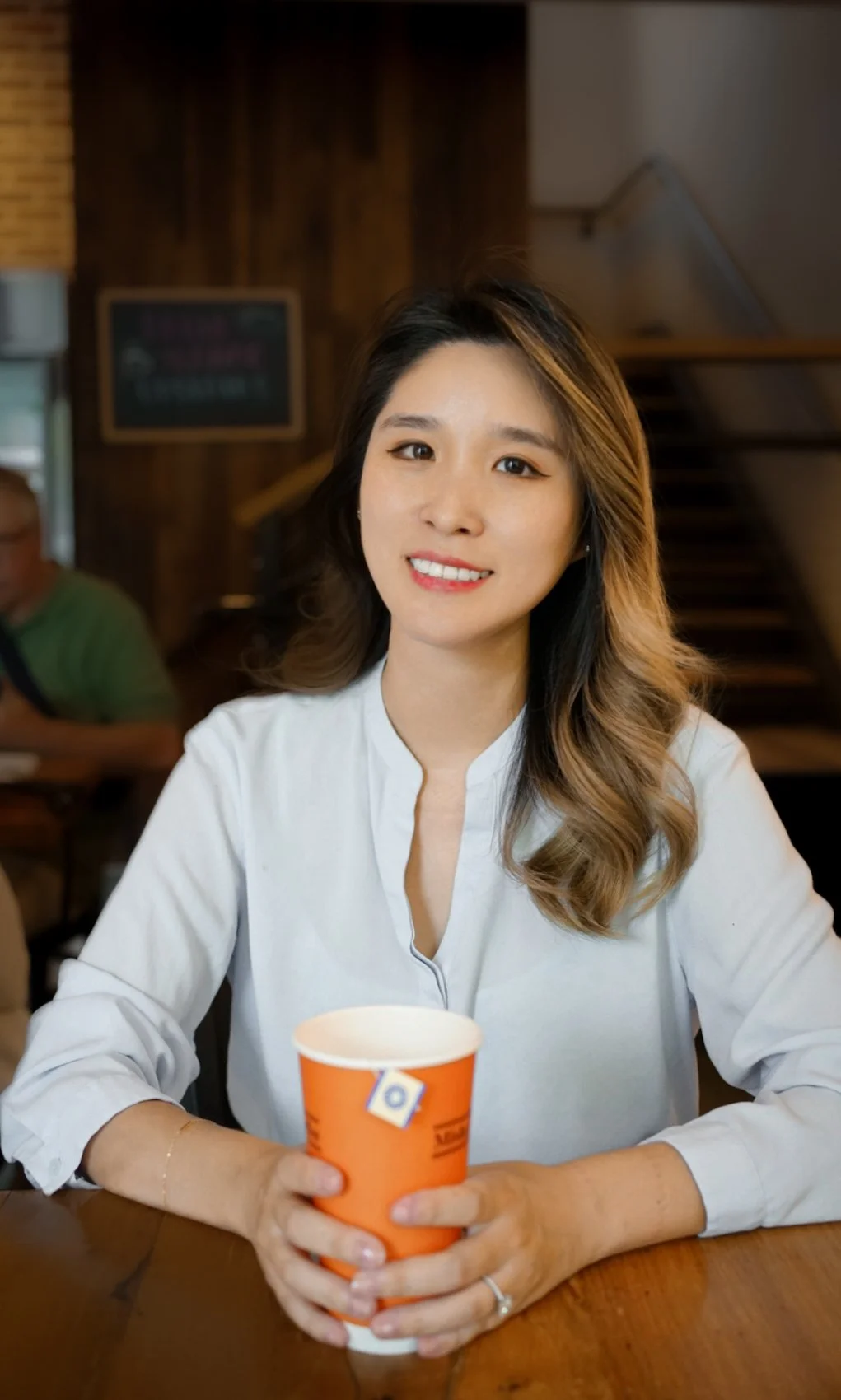
Licensed Trauma & Anxiety Therapist
in Northern Virginia & Maryland
I earned my Master of Social Work from George Mason University in 2014, and I've spent the years since building clinical depth in the specific patterns that bring most of my clients here, anxiety rooted in early family dynamics, perfectionism as a survival strategy, and the particular exhaustion of managing relationships across cultural expectations.
My training in CBT and DBT gives us practical tools for interrupting those patterns in real time, while my attachment-focused and trauma-informed approach makes sure we're addressing what's underneath them, not just the surface behavior. I'm also trained in motivational interviewing and solution-focused therapy which means we're never locked into one path. We use what actually works for you.
For clients navigating immigration proceedings, I provide comprehensive psychological evaluations, hardship waivers, asylum cases, VAWA, U and T visas, and cancellation of removal, with the same cultural attentiveness I bring to every session.
Licensed Clinical Social Worker — Virginia | License No: 0904013302
Licensed Clinical Social Worker — Maryland | License No: 33278
Ready to Take the Next Step?
〰️
Ready to Take the Next Step? 〰️

You don't need to have the right words or know exactly where to start. Most people who reach out don't. That's what the first conversation is for, to talk through what's been going on and see if this feels like the right fit.
You deserve a space that feels steady, real, and yours.
Start Trauma & Anxiety Therapy in Northern Virginia Today
Have questions first? Visit the FAQ page